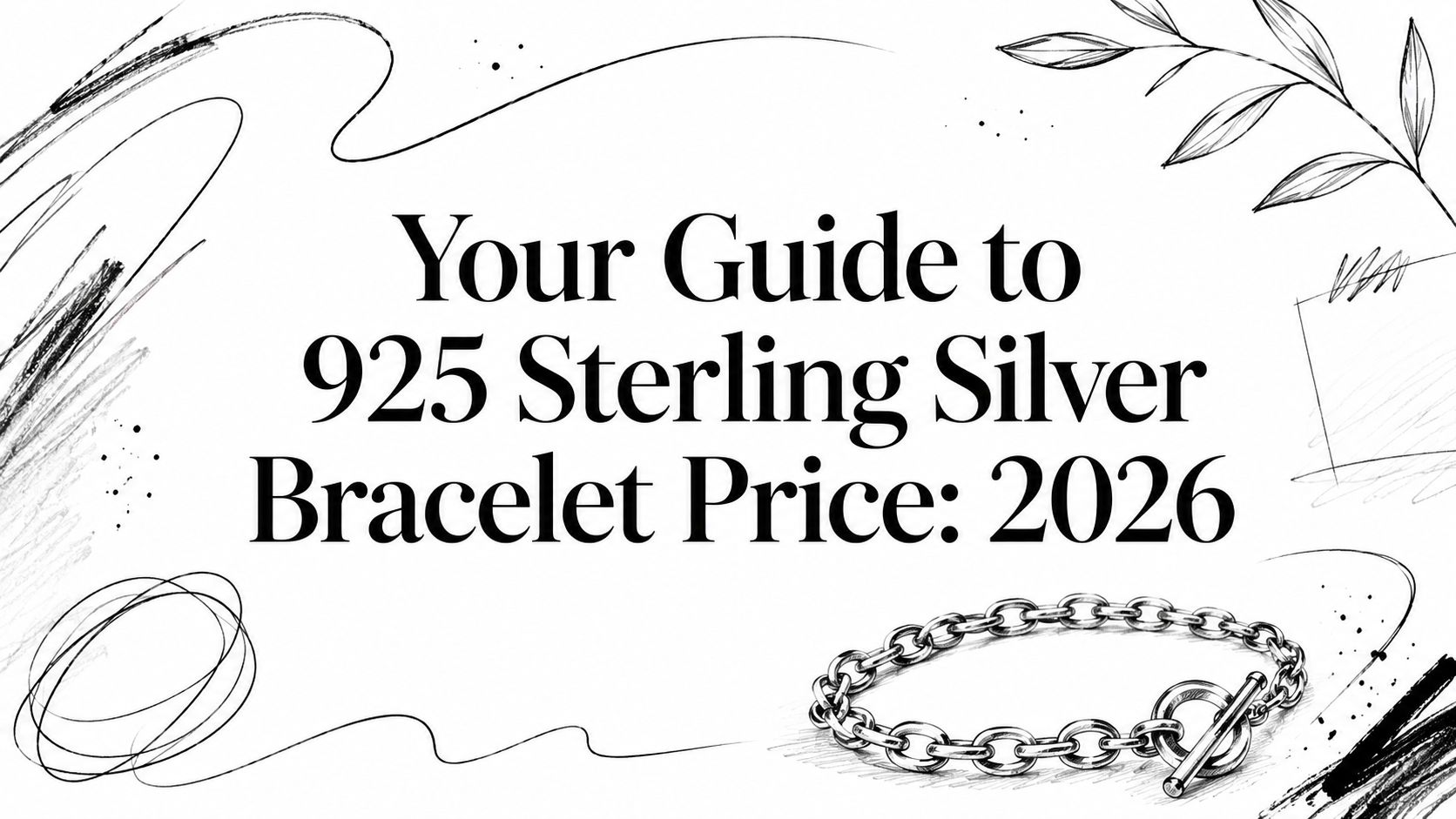
Your Guide to 925 Sterling Silver Bracelet Price: 2026
A simple 925 sterling silver bracelet can range from $50 for a light chain to over $500 for a heavy, designer piece. The 925 sterling silver bracelet price is driven by far more than just the silver itself, because weight, craftsmanship, stones, finishing, branding, and customization all stack onto the base metal cost.
If you're shopping right now, you've probably seen this already. One bracelet says 925 sterling silver, looks clean, has decent polish, and the price seems fair. Then another piece that looks almost the same is priced way higher, and now you're wondering if you're looking at better quality, pure hype, or a straight-up ripoff.
That confusion is normal. Silver jewelry sits in a weird zone where the material has real market value, but the final retail tag can jump hard based on details most stores don't explain well. That's even more true once you get into streetwear pieces, Cuban links, iced-out tennis styles, and custom work.
A lot of generic guides stop at “silver is worth what silver is worth.” That doesn't help when you're trying to figure out whether a bracelet is priced fairly for the drip you're getting. What matters is knowing which costs are real, which ones are optional, and which ones are just markup dressed up as luxury.
Why Are Some Silver Bracelets So Expensive
You open two product pages. Both say 925 sterling silver. Both have similar clasp photos. Both are shot under bright studio lighting so everything looks icy. One sits in entry-level territory, and the other jumps into premium pricing fast.
That gap usually comes from a mix of real inputs and soft pricing power.
The first real input is demand. The sterling silver jewelry market was valued at USD 13.21 billion in 2024 and is projected to reach USD 19.55 billion by 2032, growing at a 5.4% CAGR, according to Verified Market Research on the sterling silver jewelry market. When a category is that large and still expanding, brands push more styles, more tiers, and more aggressive pricing ranges.
Similar look, different build
Two bracelets can look almost identical in a thumbnail and be very different in hand.
One may be hollow or lighter. Another may have a denser feel, cleaner link finishing, a better clasp, smoother solder points, and more time spent on polishing. A basic chain made for volume production often gets priced around access and trend appeal. A heavier bracelet with sharper execution gets priced like a piece meant to last and show.
What the tag is really charging for
The retail price can include things buyers don't notice at first glance:
- Weight: More metal means more raw value.
- Labor: A clean, well-finished bracelet takes time.
- Design complexity: Fancy links and stone settings aren't cheap to execute.
- Brand positioning: Some labels charge for image as much as material.
- Retail overhead: Packaging, photography, ads, and returns all get baked in.
Practical rule: If two bracelets look alike online, compare weight, clasp quality, finish, and whether the seller explains what's actually different. If they don't, you're probably paying for presentation.
A lot of buyers only get burned because they compare style names, not build quality. That's how you end up overpaying for a lightweight bracelet with big marketing energy and not much substance.
Decoding 925 Sterling Silver Authenticity and Value
925 sterling silver means the piece is 92.5% pure silver, with the remaining portion typically made from alloy metal for strength. Pure silver looks great, but for everyday jewelry it's too soft on its own. The added alloy gives the bracelet enough backbone to survive real wear.
That matters because “real silver” and “silver tone” are not the same thing. Neither is sterling silver and silver-plated metal. If a bracelet is plated, the visible silver finish can wear off. If it's actual sterling, the silver content runs through the piece itself.

What to look for on the bracelet
Start with the hallmark. On bracelets, it's usually near the clasp, on a tag, or tucked into a less visible part of the piece.
Common marks buyers look for include:
- 925: The clearest stamp for sterling silver
- STER: A shortened sterling mark
- Sterling: Spelled out on some pieces
If a seller is charging real sterling money and gives you blurry photos that never show the stamp, slow down.
Authenticity checks that actually help
A good buying habit is to verify more than one thing at once.
- Read the product description carefully: It should clearly state sterling silver, not just “silver.”
- Inspect the clasp area: That's where honest makers usually place marks.
- Check if the listing mentions plating over sterling: That's common, and it isn't bad, but it should be disclosed.
- Ask for close-up photos: Serious sellers usually have them ready.
If you want a solid primer on hallmarks, history, and what the stamp means, this guide on understanding 925 silver jewelry gives helpful context without making the topic feel academic.
For buyers comparing chain construction and silver basics in streetwear pieces, this breakdown of a 925 sterling silver chain is also useful because chain logic carries over to bracelets more than people think.
If the hallmark is missing, the photos are vague, and the seller leans on style words like “luxury” or “iced” instead of material details, treat that listing like a maybe, not a yes.
Authenticity is step one in judging price. If the silver itself isn't clear and verifiable, every other part of the price tag becomes shaky.
The Price Breakdown From Silver Weight to Brand Hype
The floor of any 925 sterling silver bracelet price is the metal. One verified valuation method puts it plainly. Bracelet weight × 0.925 × current silver price is the starting formula, as explained in this guide on how much a 925 silver bracelet is worth. That same source notes silver spot prices rose nearly 50% in one year to about $40 per ounce in 2025, and sterling silver chains saw an average 42% retail price increase from 2024 to 2025.
That tells you something important. The heavier the bracelet, the faster the price moves when silver runs hot.

Weight is the non-negotiable cost
A thin chain bracelet doesn't need much silver. A chunky curb, Cuban, or solid bangle does. That's why weight matters more than almost any visual detail.
A smart seller will often give you enough information to infer whether you're paying mostly for silver content or mostly for styling. A weak seller hides the basics and hopes the shine does the work.
Craftsmanship changes the feel fast
At this point, two silver bracelets split apart.
A cheap build can have rough inner edges, stiff articulation, flimsy clasps, and uneven polishing. A better piece feels smooth, hangs right on wrist, closes cleanly, and doesn't look like it was rushed out of a mold and boxed five minutes later.
Build details that raise the price for good reason
| Factor | What it affects |
|---|---|
| Link construction | How solid and durable the bracelet feels |
| Clasp quality | Daily wear, security, and long-term reliability |
| Polish and finishing | Shine, smoothness, and premium look |
| Stone setting work | Whether an iced piece looks clean or sloppy |
Stones, plating, and extra finish work
Once stones show up, the base silver formula stops telling the whole story. Setting moissanite, CZ, or other stones takes layout, labor, and quality control. The same goes for rhodium finishing or vermeil layers over sterling. Those add appearance benefits, but they also add process cost.
A bracelet that's fully iced-out isn't expensive only because of the silver underneath it. You're paying for the setting work, the number of surfaces covered, and the time needed to make it sparkle without looking messy.
Cheap iced-out silver usually gives itself away in the setting. Stones sit uneven, edges catch, and the piece flashes more in product lighting than in real daylight.
Brand hype is real, and sometimes overpriced
Branding isn't fake cost. It's just not metal cost.
A label with strong streetwear positioning spends on campaign shoots, influencers, packaging, customer support, and returns. That doesn't automatically make the bracelet a bad buy. It just means part of the price is image and buying experience, not just silver weight.
A quick way to judge the markup
Ask these questions before you buy:
- Is the weight disclosed: If not, the pricing story is incomplete.
- Are the close-ups honest: You want clasp shots, side angles, and setting detail.
- Does the seller explain the finish: Rhodium, vermeil, polished sterling, and iced settings should be stated clearly.
- Is the design common or distinctive: Generic links shouldn't carry boutique pricing unless the build backs it up.
The cleanest way to read a price tag is to separate it into layers. First the silver. Then the labor. Then the design complexity. Then the stones or finish. Then the brand tax. Once you see those layers, a lot of listings stop looking mysterious.
Streetwear Style File Pricing Iced Out and Custom Bracelets
In streetwear jewelry, base silver is only the entry ticket. Significant increases occur when you add personality. That's where buyers get hit with pricing fog, especially on custom and iced-out pieces.
That frustration is real. 62% of jewelry buyers say pricing opacity is their top concern when buying customized silver pieces, according to the verified data provided for this topic. Buyers don't just want the final number. They want to know what they're paying for when a bracelet gets flooded with stones, engraved, or built into a more complex design.

Why iced-out pricing climbs so fast
Take a simple silver bracelet and then picture the upgraded version. More surfaces need prep. More labor goes into setting. More quality control is needed so the piece doesn't look crooked, patchy, or cheap under normal light.
An iced bracelet should be judged on three things:
- Stone layout: Even spacing matters more than flashy photos.
- Setting consistency: Loose-looking or uneven seats kill the look.
- Coverage logic: Full flood, partial accents, and framed stones all price differently in practice.
The jump in price isn't only about flex. It's about work.
Custom work is where hidden charges pile up
Engravings, name elements, photo features, mixed-link construction, and integrated pendants all make a bracelet less standard and more labor-heavy. Once a piece stops being off-the-shelf, the seller has to account for design prep, production handling, and the fact that a customized item usually can't be resold easily if the buyer flakes.
That doesn't mean custom pricing is a scam. It means you should ask for a clean breakdown.
Good questions to ask:
- What part of the price is the base bracelet
- What part comes from the custom feature
- Whether the custom work affects returns or resizing
- If the finish and silver purity stay the same after customization
If you like the cultural side of all this, discover hip hop jewelry history and you'll see why custom pieces carry so much weight beyond material value. In this lane, jewelry isn't just an accessory. It's identity, status, memory, and styling all at once.
A lot of buyers also cross-shop bracelets against chains because the design language overlaps. If that's you, this look at a 925 sterling silver Cuban chain helps when you're comparing link style, finish, and how much “iced” treatment changes the overall price logic.
Before buying an iced piece, watch how stone setting affects the final look in motion, not just in still photos.
Custom jewelry should feel like you're paying for specific work, not mystery math. If the seller can't explain the upcharge in plain language, keep browsing.
Get The Best Drip For Your Dollar Smart Buying Strategies
You spot a bracelet online that looks heavy, clean, and iced enough to turn heads. The price looks low enough to feel like a steal. Then it lands, the links feel hollow, the clasp fights you, and the shine has that cheap plated look under normal light. That is how buyers get finessed.
A smart buy starts with matching the asking price to what is being sold. On a plain 925 sterling silver bracelet, weight, link build, clasp quality, polish, and finishing do most of the pricing work. On a custom or iced-out piece, the upcharge should connect to real labor and real materials. Engraving, moissanite, hand setting, and tricky link patterns all cost money. Random “luxury” wording should not.
Where different sellers win and lose
Big marketplaces are useful for price checking, but a lot of listings hide the details that matter. Photos are edited hard, specs are thin, and “925” gets buried in the copy. Independent makers can give you better finishing and more original work, especially if you want custom sizing or engraving, but lead times and return rules are often tighter.
Specialty streetwear jewelry stores sit in the middle. They usually understand what buyers want from hip-hop styling, chunkier links, iced surfaces, sharper wrist presence, but you still have to read the listing like a jeweler, not a fan. VVS Jewelry is one brand in that lane with sterling silver and moissanite-heavy styles. Treat that kind of store as a comparison point, not a free pass. Check metal details, close-up stone setting, clasp construction, and whether the price lines up with the work.
How to shop without getting finessed
Use a simple filter before you buy:
- Check the metal callout: “925 sterling silver” should be stated clearly, not hinted at with vague silver-tone language.
- Look for weight or solid construction cues: If a thick bracelet has no weight info, ask why.
- Zoom in on the clasp: A bad clasp kills daily wear fast.
- Read the custom charges closely: Engraving, nameplates, and stone upgrades should have a clear add-on cost.
- Watch stone quality claims: “Moissanite” should not be priced like glass, and glass should not be priced like moissanite.
- Review return terms before paying: Personalized pieces often have stricter policies.
One more check matters if you wear jewelry for long stretches. Skin comfort can change the value equation fast, especially with plated parts or mixed metals. If that is part of your buying decision, this guide on the best jewelry for sensitive skin helps you screen pieces before you spend.
Smart sale shopping
A sale price only means something when the original piece was priced fairly. A bracelet marked down from fantasy pricing is still a bad deal.
Good sale buys usually have three things: clear metal specs, believable product photos, and a discount that still makes sense once you factor in weight, finish, and any custom work. If an iced-out bracelet is cheap enough to seem unreal, check what the stones are, how they are set, and whether the base is solid sterling silver or something thinner hiding under the drip.
Buy for wear, not for the product page. The best deal is the bracelet that still looks tough on your wrist after the unboxing glow wears off.
Beyond the Price Tag Care and Long Term Value
Once you buy the bracelet, care is what protects the money you spent. Sterling silver can keep its look for a long time, but only if you don't treat it like a throwaway accessory.
A few habits matter more than anything else. Wipe the bracelet down with a soft cloth after wear, especially if you've been sweating or wearing lotion. Store it away from open air when possible. Keep it clear of harsh chemicals, sprays, and cleaning products.

Habits that keep your bracelet looking expensive
- Clean gently: Use a soft cloth, not rough paper or random household cleaners.
- Store smart: Separate it from harder jewelry so it doesn't get scratched up.
- Check stones and clasps: If the bracelet is iced-out, loose settings need attention early.
- Take it off for rough wear: Gym sessions, pool time, and chemical exposure aren't your bracelet's friends.
If your skin reacts to certain metals or finishes, this guide to the best jewelry for sensitive skin helps you think through comfort before your next purchase.
A good bracelet holds value in more than one way. There's the silver content, sure. But there's also wearability, condition, and whether the piece still looks sharp months later. If you understand authenticity, weight, craftsmanship, custom pricing, and care, you're already shopping with better eyes than typical shoppers scrolling those product pages.
If you're ready to upgrade your wrist without guessing at what drives the price, browse VVS Jewelry for sterling silver, moissanite, and custom streetwear pieces, then compare the build details the way a smart buyer does: weight, finish, clasp quality, and whether the design justifies the tag.